INDEPENDENT PROJECT / DELIVERY & HOSTING
The site is part
of the work.
A portfolio I build, deploy, host, and observe myself.
01 / THE GOAL
Own the path from source to serving.
This portfolio gives me a small, real system to operate from end to end.
I wanted a repeatable way to publish changes from my own Git service, serve the site on a dedicated virtual machine, and understand which pages people visit. I used static HTML, CSS, and SVG so the delivery process can stay focused on the files visitors actually receive.
The site runs on Debian with nginx in Docker. Forgejo and its runner handle delivery, a reverse proxy handles public traffic, and Umami records page views and selected interactions.
02 / DELIVERY
A commit becomes a published site.
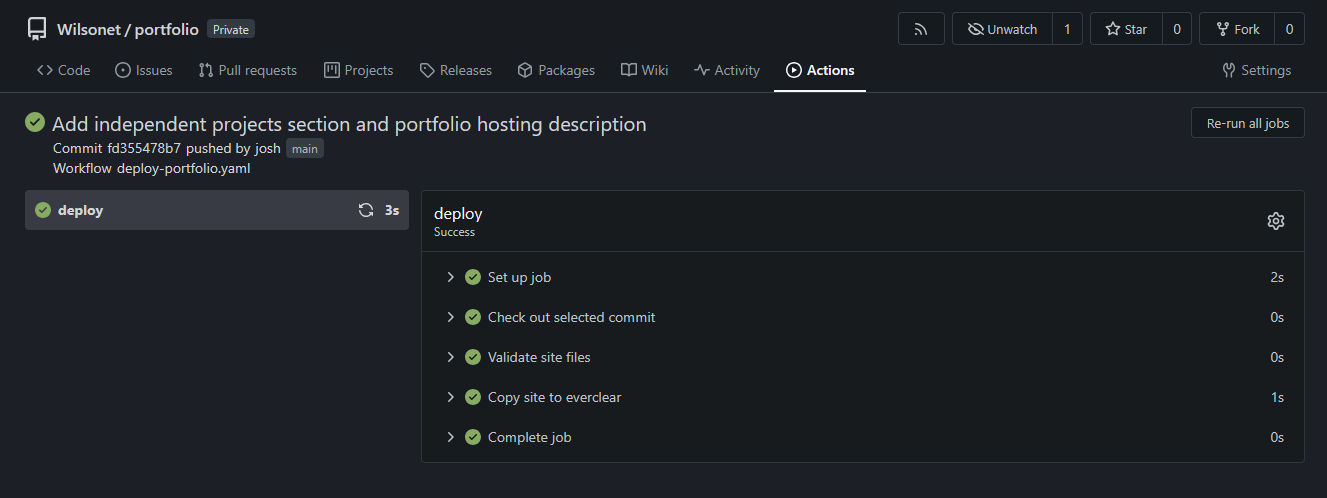
The deployment workflow checks the site files, copies them over SSH, and checks the local HTTP endpoint. nginx reads the published directory through a read-only mount.

A completed deployment
 Open full-size screenshot
03 / DESIGN CHOICES
Keep each part easy to inspect.
Serve static files
HTML, CSS, and SVG keep the serving layer small. Content changes can be reviewed in Git, and the web container only needs to read the deployed files.
Use a dedicated deployment account
The runner uses an SSH key for an account that owns the site directory. Host key verification checks the destination before rsync copies the content.
Check the result
The workflow checks required files before copying and makes a local HTTP request afterward. That provides immediate feedback from the serving host; the public route is also checked from a browser.
Publish only the analytics endpoints
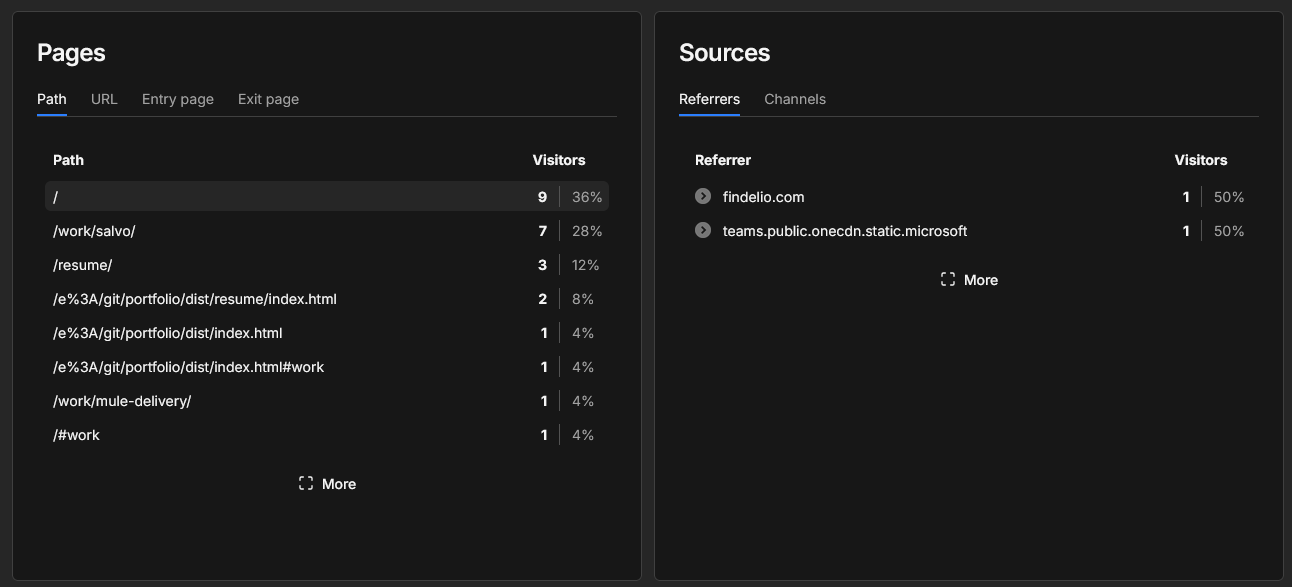
The public analytics route exposes the tracker script and collection endpoint. The Umami dashboard remains available on the local network, where I review visits and events such as LinkedIn clicks.
04 / SERVING & ANALYTICS
Public traffic.
Local administration.
The reverse proxy routes the portfolio and the analytics collector to their respective services. Administration follows a separate local path.

Page tracking in use
 Open full-size screenshot
05 / IN USE
You’re using the result.
The portfolio is publicly available and deployed through Forgejo. Page views and LinkedIn click tracking are working. The same delivery path supports the home page, experience page, case studies, and diagrams.
Getting there meant resolving runner SSH authentication and host key configuration, then testing analytics from real devices. Those details became part of the operating setup rather than steps to repeat for every update.
The current workflow synchronizes files in place. A useful next improvement is to stage each release, switch it into service as a unit, and keep the previous release for rollback. Automated checks of the public route would add another layer of verification.